
Utopian Bridge
Remarks given at a memorial for Burton Pike in November, 2023

Burton taught a course in literary criticism by having us translate one-page of a text and make observations about what sorts of images, sentences, syntax, tempo were used? A close reading that trained our eyes and ears to the subtle differences and similarities between each writer’s particular melody, rhythm, level of abstraction, mood, obsessions. How did each writer translate the world into words, and how would we then interpret and translate that written world? How did each writer fit and not quite fit into the shared cultural continuum; for it was important that there was one, despite the necessity of sometimes breaking away from it.
These days, when differences between cultures, persons, languages, and ideas are increasingly diminished by the forces of globalism and moral conformity, by technological attempts to anticipate and control thoughts and language, it is all the more important to salvage a space for individual idiosyncratic aesthetic and ethical experimentation, where translation and communication need not mean a collapse into sameness. Nor does a celebration of difference spell an inability to communicate from one person or one culture to another.
In his 2005 essay “Literature as Experience,” Burton wrote asking how one might build a utopian bridge from an “isolated subjective mind to the social, moral, and ethical concerns of society at large?” A belief in such a possibility seemed, he wrote, to have “since been lost, a belief that in spite of the increasing solipsism and dehumanizing specialization of modern life there is some sphere or level […] in or on which all the conflicting and apparently unrelated fragments, self and world, feeling and intellect, science and society, skepticism and belief, could somehow be melded into a coherent, ethical whole.”
In April of 2021, I asked him what he thought then about this utopian bridge: was a belief in communication from subjective self to subjective self today hopelessly naive? He then reminded me of Musil’s condition toward the end of his life, in poverty and exile, looking at a world under totalitarianism. From out of the darkness and despair of that historical moment, Musil dared to look to the youth to come, after the war, to the future. He seemed to say that significance must still be sought and communication approximated—in even the worst of times, lest we relinquish our humanity to the brutal engines of destruction. Burton concluded that Musil “could at best only hope, so can we now. I don’t see any way, now as well, of gathering together the unrelated fragments of the world; just a hope. The bridge is for the future, not for now.” Then he signed off, saying, “Age is beginning to catch up with me (rather a surprise!), so I look forward to your carrying on”. In his honor, we must try now, despite everything, to imagine the sorts of bridges that allow for difference and that foster creative individual aliveness.
https://centerforthehumanities.org/event/a-celebration-of-burton-pike
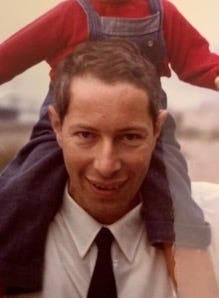
(A young Burton Pike with a member of the at that time future generation on his shoulders)
wonderful, thoughtful piece. we need reminding of these things from time to time, especially now.
That video is amazing & unilaterally underscores: you translator people are basically akin to one of the coolest secret societies around. Essentially honored to get a humbling peek behind the curtain at the life of a man whose name I only know from seeing it beside + typeset smaller than Musil’s, but whose name is also of course a pretty significant reason for my knowing Robert Musil at all.
Belated condolences on passing of your teacher & THANKS SO MUCH for sharing!!!!!!!!